

How Media Bias Shapes Geopolitics: The 2025 Information War You’re Not Seeing
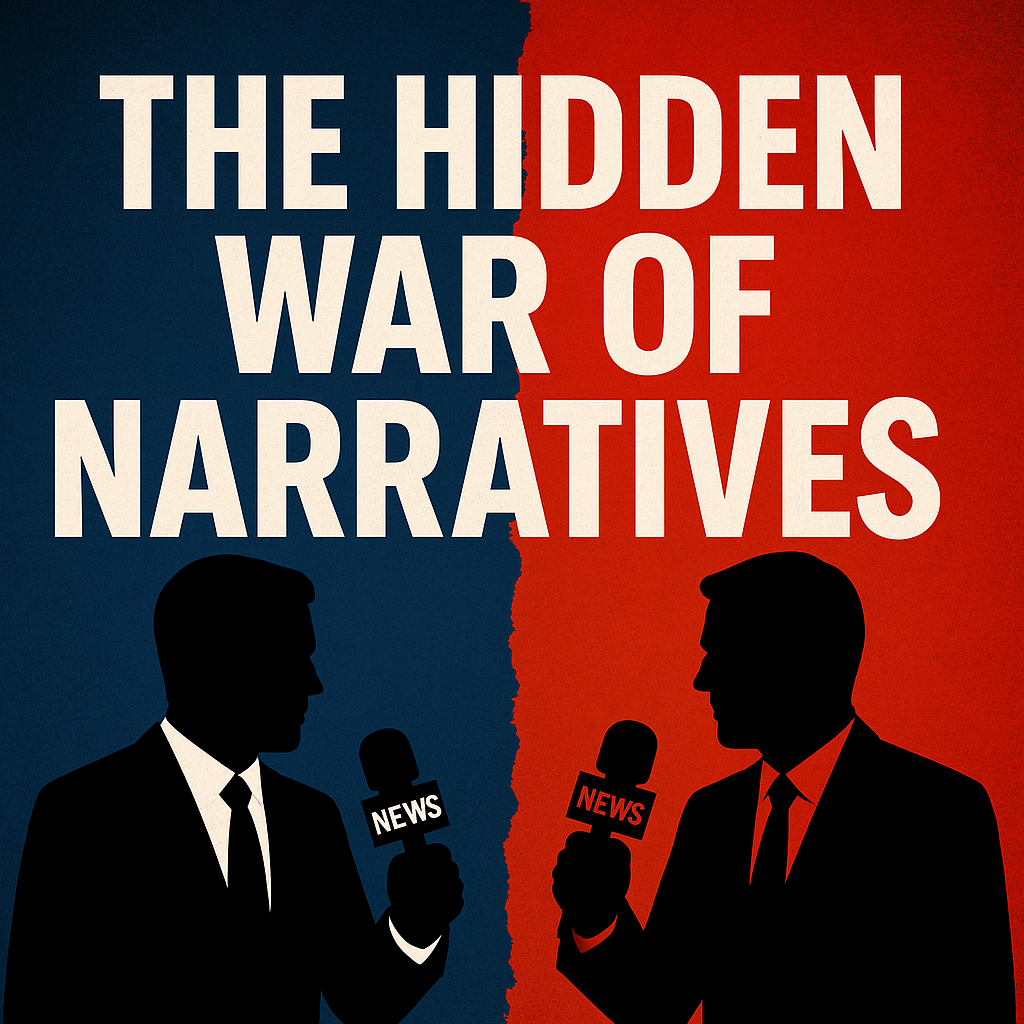
The Hidden War of Narratives
Imagine turning on your TV or scrolling your phone and hearing one story about a war. Now imagine someone else, at the same time, hearing the opposite story on a different channel. That is our hidden war today. In 2025, news isn’t built the same for everyone. Media bias in headlines and tweets is like tinted glasses. It makes facts look different colors, shaping how we see the world.
We live in an information war — one fought with narratives and visuals, not just guns and tanks. Across the globe, governments, media owners and tech companies all march in formation. Every day they feed us a version of reality. Western news outlets may hype one angle, and state broadcasters in China or Russia will cast an entirely different spin. Social media algorithms reinforce those spins. Over time, we each live in our own media bubble, rarely hearing the full picture.
What you read in the news today can decide how you vote tomorrow. When it comes to foreign policy, this quiet struggle over facts can have real-world consequences. If a TV channel calls an action “defensive,” viewers might nod along. Call it an “invasion,” and people get angry. Different media present two sides of every story. You’re likely to believe the one you hear most often. This is the power of media narratives in shaping geopolitics.
This article peels back the curtain on that battle. We’ll trace the roots of media bias, show how global news outlets spin events, and explore the tech trends that keep us divided. We’ll look at CNN and Fox in the US, BBC and GB News in the UK — even contrast them with Russian and Chinese state media. We’ll explain how AI and algorithms feed the fire, and how synthetic news and echo chambers lock us in. The goal isn’t just to expose bias, but to help you see through it. Because in an age of information warfare, understanding these forces is a survival skill.
Media Bias: An Age-Old Force
Media bias is nothing new. Newspapers, radio and TV have always told stories with a slant. In the 1800s, U.S. papers printed wild, colorful headlines (the “yellow journalism” era) to grab attention and push politics. Around the world, governments have long spun news to rally citizens. WWI propaganda posters, WWII newsreels and Cold War radio broadcasts all used media as a weapon.
Today, bias is often more subtle. Media owners, advertisers or political leaders shape coverage behind the scenes. A news channel backed by one party can make its favored politicians look heroic. If a state funds a broadcaster, that outlet usually echoes the government’s view. Even outlets that seem independent can lean one way or another depending on who funds them or who they target. The truth is, there’s no perfectly neutral news source. Every story is filtered through people’s choices.
The rise of 24/7 digital media has turned up the volume on bias. In 1996 Fox News launched to challenge what its founders saw as a liberal media monopoly. Cable TV soon split into camps: one side championing conservatives, the other championing liberals. The UK has a state-funded BBC that aims for balance, but it too faces criticism from all sides. The internet added another twist. Anyone with a smartphone can broadcast. Blogs, tweets and video clips let niche opinions flourish. The result is a fractured media landscape where communities often hear only echoes of their own views.
The Power of Narrative
News doesn’t just report facts. It tells a story, and that story can tilt one way or another. Journalists and editors pick what to emphasize and what to leave out. They pick characters in their plot — heroes, villains, victims — and adjectives to color events. A conflict can sound righteous or reckless depending on the narrative. Calling an operation a “mission” instead of a “raid,” or labeling a group “militants” instead of “freedom fighters,” triggers very different reactions from readers.
These framing choices happen every day. For example, one news channel might describe a border clash as “government forces repelling invaders,” while another might call it “rebels fighting oppression.” Both use similar facts, but they paint contrasting pictures. Over time, each audience begins to believe its own narrative. People tend to trust stories that fit their world view. If your news often praises a leader as “strong,” you begin to see them as a hero. If it always calls a rival “weak” or “dangerous,” you grow suspicious. The story you get shapes what you think.
This process isn’t accidental. Governments and PR teams know it. Reporters often rely on official sources and press briefings for fast information. Those in power craft the quotes, images and videos they release to support a chosen angle. A dramatic clip or an emotional speech can go viral first, cementing one side’s version of events. By the time an alternate view comes out, the first narrative is often already stuck in people’s minds. The result is a world where many of us see only our own reflection of reality.
The US News Divide: CNN vs Fox
In the United States, the media battlefield looks clearly divided. Fox News and CNN dominate cable TV, and each has its loyal tribe. Fox came along in 1996 and quickly became the go-to channel for conservative viewers. Its prime-time hosts often champion Republican politicians and highlight scandals on the left. CNN, on the other hand, marketed itself as a global news pioneer with a more centrist or left-leaning appeal. Both networks cover major events, but the tone and focus often differ sharply.
For example, take a recent protest or political rally. CNN might highlight interviews with speakers and emphasize calls for justice or policy change. Fox might instead focus on law and order or show clips of street clashes. To many viewers it feels like two separate realities. Each network amplifies stories that fit its audience’s views and downplays others. This creates a feedback loop. Conservatives who trust Fox may see CNN as biased “fake news,” while liberals who watch CNN may see Fox as pushing a partisan agenda.
Polls show Americans have grown deeply divided along these lines. People who watch Fox trust it far more than any other outlet, and viewers of CNN and similar networks trust those instead. Rarely will a fan of one channel turn to the other for news. The result is two tribes living in the same country but believing different things. In effect, US media bias means Democrats and Republicans often occupy echo chambers, each side convinced its own version of reality is correct.
Britain’s Channels: BBC vs GB News
The United Kingdom has its own media split. For decades, the BBC was the unchallenged public broadcaster. It’s funded by a license fee and supposed to be impartial. In reality, opinions on its bias vary. Some viewers on the left say it has an establishment or even right-leaning slant; some on the right accuse it of liberal or metropolitan bias. Either way, by the 2020s many Brits felt they needed a new alternative.
Enter GB News, launched in 2021. Styled as a British answer to Fox News, it set out to give a voice to people who felt ignored by traditional media. Its shows and hosts often stir controversy. They run heated debates on immigration, COVID policies and culture wars. Early on, GB News surged in popularity among older and more rural audiences. It even beat the BBC on ratings in some parts of Britain for a time. Its style is different: more combative and opinionated. Meanwhile the BBC remains careful and formal, focusing on facts and balance.
To see the difference, compare any big news day. On a national story, the BBC will call spokespeople from all sides and fact-check claims. GB News might feature politicians and pundits accusing each other on live TV. During foreign events, BBC correspondents often stress diplomacy and analysis, while GB News anchors highlight how Britain’s interests are at stake. The two channels give audiences distinct narratives. British viewers increasingly choose BBC or GB News based on the kind of story they want to hear.
Global Media: Russia, China, Middle East
Turn to Russia, and the contrast is stark. Most TV channels there are controlled by the government, so news is basically a Kremlin mouthpiece. When Russia invaded Ukraine in 2022, state media called it a “special military operation” aimed at “denazifying” Ukraine. Viewers saw images of proud soldiers and patriotic music. Meanwhile Western outlets called it an illegal invasion showing burning buildings and refugee columns. Russian channels also highlight problems in the West — like violent protests or political chaos — to suggest that democracy leads to disorder.
In China, news is even more tightly controlled. Major TV networks and newspapers are run by the Communist Party, and censorship is strict. Chinese media often praise the government and highlight the country’s successes: booming economy, technological achievements, poverty reduction. On the other hand, they barely report anything like human rights abuses or protests. Internationally, Chinese outlets like CGTN push Beijing’s narrative. For example, during trade disputes or tech conflicts, Chinese media will frame them as Western hostility or unfair competition.
The Middle East is a tapestry of competing narratives. Qatar’s Al Jazeera channel once revolutionized news by broadcasting Arab viewpoints worldwide. It often gives a platform to opposition voices and highlights U.S. and Israeli actions critically. By contrast, Saudi-funded Al Arabiya tends to back Gulf governments and may downplay dissent. Iran’s state media (like Press TV) promotes Tehran’s view: anti-Western, pro-Palestinian, pro-Shia alliances. In each country, news channels reflect that regime’s interests. The same event — say, a protest or conflict — can look very different when reported from Doha, Riyadh or Tehran. Viewers in the region often choose channels aligned with their government, reinforcing the idea that even geography (which country you live in) can shape the news you see.
Algorithms and AI: Fueling the Fire
Media bias isn’t just traditional journalism anymore. Algorithms and AI feed the beast too. Take social media: sites like Facebook, YouTube and TikTok use computer algorithms to decide what posts you see. These are designed to grab your attention, so they often favor content that sparks strong emotions. Outrage and fear keep people clicking, so political posts that confirm your biases get amplified. Before you know it, you’re served more of the same. This creates filter bubbles: you see mostly news that matches your existing views, and almost never see the contrary side.
Then there are bots and AI tools. Misinformation can be automated at scale. Fake accounts flood social networks with claims or memes. Advanced AI can write realistic news articles or social posts that look personal. Deepfake technology can produce convincing images or voices, making it harder to tell fact from fiction. For example, researchers have found AI-generated avatars pretending to be news anchors spreading propaganda about elections, or phony experts quoting fake data in viral clips. All of this makes the media landscape even more confusing.
Platforms know these problems. They claim to try tagging false information or shutting down bots. But the system still rewards clicks over accuracy. If an AI tool or a troll farm pumps out sensational claims, those claims often climb to the top of your feed. Because many people don’t verify before sharing, these algorithmic echo chambers spread biased or false narratives quickly. In short, the very technologies that connect us can also trap us in polarized bubbles.
Synthetic News and Echo Chambers
Now imagine an AI writing the news. It isn’t far-fetched. Synthetic media is here. For instance, some countries have rolled out AI news anchors. China unveiled digital presenters that never sleep: they read the news 24/7, online and on TV, often delivering party-line messaging with a blank smile. On social media, “news” stories can be generated by algorithms with little human oversight. In 2024, watchdogs exposed dozens of videos by a fake channel called “Wolf News,” featuring a made-up anchor ranting about America’s problems while praising Beijing.
Meanwhile, echo chambers grow. If an algorithm learns you like certain topics, it will keep feeding them. Imagine your phone’s news feed analyzing your likes and then tailor-making a stream of articles just for you. They could look like real journalism – full sentences, quotes, even official-looking logos – but they might all agree on one side of an argument or push a conspiracy. It’s like living in a house where every mirror reflects the same spin on events. Once inside, it’s hard to step out and see the full picture.
The danger is that bubble becomes reality. When entire online communities share nearly identical news sources (sometimes automatically generated), they build a worldview that feels true but is incomplete. This “post-truth” era means even hard facts are questioned. Someone inside an echo chamber might dismiss official data as “fake news” if it conflicts with their feed. In geopolitics, misunderstandings flourish: one country’s press may cheer a military strike while another’s cries foul play. Without a shared narrative, conflicts can spiral out of control.
The Peril of a One-Sided Media Diet
A media diet heavy in only one flavor can be unhealthy. If your breakfast news is all alarm, and your evening news is all outrage, you end up anxious, angry and misinformed. On a societal level, this breeds division. Communities become echo chambers. People grow more extreme in their views and distrust those who disagree. All it takes is constant exposure to one perspective, without balance, to sow mistrust.
For democracies, the stakes are high. When citizens can’t agree on basic facts, healthy debate is impossible. Elections become battles of which narrative wins, not of ideas. Trust in institutions erodes when “the media” is seen as an enemy. Geopolitically, the cost is even greater. Leaders rely on public support for foreign policy. If that support is built on propaganda rather than reality, the results can be disastrous. Countries may rush to conflict or back the wrong side because their media fed them a false narrative.
The antidote is a balanced media diet. Seek multiple sources, even ones that challenge your beliefs. Read past headlines and question who is telling the story. A variety of perspectives — from different countries, parties and platforms — can help you spot the spin. It might feel uncomfortable at first to see all sides, but it’s vital. In an age of synthetic news and relentless algorithms, a little skepticism is your best defense. Remember: no single newsroom or government has a monopoly on truth. The healthiest news diet includes voices from around the world, from left and right, from established papers and small blogs. That way, no single story can dominate your worldview.
In the end, truth is a team sport. Geopolitics will only stay sane if we keep our feeds balanced. Because if we don’t, our assumptions become delusions. And in a world armed with nuclear missiles and AI deepfakes, believing the right story could be a matter of survival.
